Wednesday, October 30, 2024
Short Essay 2_ZHAO, Ruoqi (1155217227)
Short Essay 2_Chau Yee Ki, Joyce (1155206824)
When talking about Nike, the world’s largest supplier of athletic shoes and apparel and a major manufacturer of sports equipment, what pops into your head immediately? Is it the iconic “Swoosh” logo? Or the oft-repeated slogan “Just Do It”? Have you ever considered why these impressions are so deeply rooted? This should be undoubtedly attributable to the effective utilisation of the PESO model by the Brand.
According to Dietrich (2014), the PESO model is a strategic framework used in marketing and public relations to categorise media into four types, including Paid, Earned, Shared, and Owned. This model describes the use of different media channels in organisations’ marketing approach.
Let’s jump into the concept of “Paid Media” first. Paid media can be broadly categorised into two types which are advertising-supported consumer content and advertising connections that provide content. Nike definitely employs both categories to engage the audience, thereby maintaining visibility in the market with effectively conveying the key brand messages.
Taking “Just Do It” campaign as an example, it not only collaborates with high-profile athletes such as Michael Jordan and Serena Williams, but also produces high quality and innovative visuals and has a cross-platform presence, encompassing TV, print, digital, and social media, so as to maximise the power of message and the reach of consumers. With this iconic marketing campaign, it becomes a cultural touchstone and solidifies the leading position of Nike in the sportswear industry.
“Earned Media,” which refers to a mix of brand mentions on news outlets and shares of social media platforms like Facebook, Twitter, and Youtube, consists of branded messages that another entity distributes. As a retail brand, Nike benefits from extensive media coverage, including articles and reviews of the products, as well as product seeding to the influencers and athletes to share their experience with the products, resulting in organic buzz. It is shown that earned media enhances the credibility of Nike, making it a more valuable asset for the Brand.
Moving on to the “Shared Media”, it refers to content which is shared across third party platforms and between multiple owners. As mentioned before, Nike launched “Just Do It” campaign and it initiated “#JustDoIt,” the hashtag campaign to continuously connect the customer with the iconic tagline on social media platforms. With the mentioned hashtag campaign, it also accelerates the user-generated content and Nike would actively share content created by its customers to engage directly with consumers, fostering a sense of loyalty among them.
The successful case of Nike illustrates that brands utilising different media types would contribute to marketing success. Leveraging on the PESO model, Nike creates a cohesive brand narrative effectively, thereby amplifying visibility and building close-knit relationships with the customers to drive brand loyalty, alonging with the sales.
Short Essay 1_LUO Yingxue(1155217397)
How Netflix made a name for itself-an application of Blue Ocean Strategy
Gone are the days we watch films and series only via traditional media. We now have access to diverse content for entertainment whenever and wherever we want thanks to the increasing development of new media, particularly streaming media, which refers to a type of media content transmitted and played in real time through the Internet. In the massive market of streaming media, Netflix definitely occupies a key position. It’s not only the industry pioneer, but also one of the most viewed platforms in the world with the widest range of content coverage. From my perspective, Netflix can’t make it without implementing Blue Ocean Strategy, which focuses on creating uncontested market space.
The main point of Netflix’s Blue Ocean Strategy lies in value innovation, which pursues differentiation and low cost, instead of beating the competition. Netflix shifted from traditional DVD rentals to an on-demand streaming media, solving problems like time and place constraints, rental fees and limited rental time. By offering unlimited streaming for a fixed price, Netflix made entertainment accessible, flexible and affordable, appealing to more and more viewers through a platform, which is both convenient and cost effective, just like its homepage says-we want to entertain the world. Whatever your taste, and no matter where you live...Furthermore, Netflix differentiated itself with an advanced recommendation system, which not only enhanced users’ experience with personalized features, but also made Netflix distinct from traditional rentals and platforms.
From Blue Ocean Strategy, the ERRC Grid provides a practical and clear framework to explain how Netflix achieved value innovation.
Eliminate: Netflix eliminated traditional modes of DVD rentals, including due dates, late fees, and monthly rental limits, which result in a lot of inconvenience and unnecessary cost. By removing these elements, Netflix created a more flexible experience for users, which can be regarded as a significant step to value innovation.
Reduce: Netflix reduced its dependence on content produced by third parties, instead created its own original content. This change not only reduced costs of licensing, but also made Netflix have a better control over its content base. Therefore, Netflix enhanced its long-term value by setting up a unique and more competitive content ecosystem.
Raise: Netflix raised personalized level for users through its recommendation algorithm, including tailored promotional artwork and customized content tags, driven by data analysis of past viewing content and preferences. In addition, Netflix raised compatibility of diverse devices, which allowed seamless access to its platform and offline, on-the-go viewing, enhancing usage convenience and user engagement.
Create: Netflix created a variety of original content, which include different themes like romance, suspense, action, campus and so on. In addition to a growing number of content, most of its original series are high-quality and attractive. For instance, Stranger Things as a representative of world-known series, not only won a dozen awards, but also provoked a massive amount of viewers’ enthusiasm, even once caused breakdown of Netflix’s platform. As a result, original content creation helped Netflix stand out in a competitive media field and built a reputation that keeps viewers loyal.
Another concept of Blue Ocean Strategy-Three Tiers of Noncustomers, also helped Netflix broaden its market potential.
First Tier (Soon-to-be): Netflix’s initial target users was former cable viewers who pursued a more flexible approach to watch. Through offering an on-demand model at reasonable prices, Netflix attracted a lot of noncustomers “who are on the hedge of its market waiting to jump ship”.
Second Tier (Refusing): Netflix developed diverse and accessible content, which serve as a starting point, appealing to those noncustomers who were hesitant to accept subscription service.
Third Tier (Unexplored): Netflix’s expansion to international markets and investment in local content allowed it to reach various areas, more than 190 countries and 21 languages around the world, which not only attracted multicultural noncustomers, but also enhanced Netflix’s position as a leader of global streaming media.
In conclusion, Blue Ocean Strategy focuses on differentiated value and meeting customers needs in innovative ways, which make company achieve sustainable growth. As a good example, Netflix built a unique competitiveness in media industry through Blue Ocean Strategy. It has become not only just a streaming media, but also an essential part of modern entertainment. In other words, while making profit, Netflix is constantly making efforts to entertain the world.
Tuesday, October 29, 2024
Group Discussion_Week 8_Group 3
Group 3 (Aleem、Fengning、Aeri、Songgela)
The PEO Framework of KFC
Social Media Ads: KFC runs targeted ads on social media platforms. These ads often feature mouth-watering images of their food, promotional deals, or engaging videos. For example, during a new product launch, KFC run a series of Instagram and Facebook ads showcasing the new item.
- Digital Advertising: KFC utilizes various forms of digital advertising, including banner ads on popular websites, Google Ads, and video ads on platforms like YouTube. These ads are designed to drive traffic to their website or app, where customers can place orders or find more information about promotions.
- Influencer Relations: KFC collaborates with influencers to create buzz around their brand. For example, they partner with popular food influencers on Instagram or YouTube to review new menu items or showcase their dining experience at KFC.
- Link Building: KFC employs SEO strategies to improve their online presence. By creating high-quality content that other websites want to link to, such as engaging blog posts or informative articles about their products, KFC enhances their search engine rankings and drives more traffic to their site.
- Meme culture of ‘Crazy Thursdays’: ‘Crazy Thursdays’ is a regular marketing campaign for KFC that offers special deals every Thursday. ‘Crazy Thursdays have generated a large number of online quotes and creative copy, creating the unique phenomenon of ‘Crazy Thursday Literature’. This phenomenon not only increased brand exposure, but also enhanced interaction with consumer.
- Official websites of KFC: KFC's official website plays a crucial role in brand promotion. Firstly, it showcases KFC's brand image and core values, and enhances consumers' sense of identity by telling the brand story and history. Secondly, the official website details product information, including menus, nutritional facts and new product releases, to help consumers understand and try new products.
KFC’s official advertisements: they play a crucial role in brand promotion. They effectively shape the brand image and convey core values, often incorporating local culture to enhance relatability. Ads are key in promoting new products and special offers, quickly reaching a wide audience through various media channels. Creative ad content fosters consumer interaction, making campaigns like “Crazy Thursday” highly engaging. Continuous advertising boosts brand recognition and recall, maintaining high visibility. In a competitive market, KFC’s ads highlight unique selling points, attracting more customers. Overall, KFC’s advertising strategies strengthen brand awareness and emotional connection with consumers, solidifying its market leadership.
Group Discussion_Week 8_Group 10
Group Members:
Liu Zhilin
Chen Chenyu
Wang Ziling
Luo Yingxue
Qian Zirui
Huang Yufei
The POE Framework of McDonald's
Paid:
1. Digital Advertisements
McDonald's electronic advertising channels are very diversified, including short video platforms such as YouTube, TikTok; social platforms such as Instagram, Facebook and so on. Due to the large number of users in these platforms, McDonald's advertisements are able to reach more demographics from different backgrounds and provide localized campaigns according to their location.
2. Outdoor Advertisements
McDonald's has also put a lot of effort into physical outdoor advertising as well. Station billboards, mall floor guides and building LED screens are all included in McDonald's outdoor advertising avenues. For example, MacDonald once designed a Ronald McDonald's bench to allow consumers to take photos.
3. Television Ads
By running ads during popular television shows, sporting events and other high-visibility programming, McDonald's is able to reach a wide audience. Through appealing visuals, memorable jingles and mouth-watering food images, McDonald's TV commercials impress consumers, strengthen the brand image and promote menu products.
Owned :
1. Official Website
McDonald’s official website provides a wide range of content, including company information, menu details, promotions, nutritional information, and company news. It serves as a core platform for displaying the brand's latest updates and maintaining brand presence. https://www.mcdonalds.com/us/en-us.html
2. Mobile App
McDonald’s app (such as McDelivery) offers online ordering, loyalty points, and coupons. The app delivers a personalized experience with convenient services and pushes notifications for new offers, boosting user engagement.
3. Social Media Accounts
McDonald’s operates official accounts on social platforms (like WeChat, Weibo, Douyin, Xiaohongsghu, Instagram, and Facebook). Each platform caters to different audience segments and provides various and instant brand updates and engaging content, increasing visibility and user interaction.
4. In-store Media
This includes menu boards, in-store digital screens, tray liners, and packaging designs. Through these in-store channels, McDonald’s communicates brand stories, promotes new products, and shares current offers, enhancing the customer’s in-store experience.
5. Membership System
McDonald’s membership system, accessible through its app and mini-programs like on WeChat, allows members to earn points with every purchase, whether ordering through the app, drive-thru, counter, or kiosk. This system boosts customer loyalty, encouraging repeat visits and providing personalized recommendations based on member data.
6. Email Newsletters
McDonald’s regularly sends email updates to subscribers, featuring new products, promotions, and company news. Email provides a direct communication line to users, making it an effective tool for targeted promotion.
Earned:
1.Brand Influence and Word of Mouth
McDonald’s enjoys high brand influence and popularity on a global scale. The quality of its products and services has been recognized and praised by a large number of consumers, winning a favorable word of mouth. Consumers share and recommend McDonald’s through social media and other channels, further expanding its brand influence and market share.
2.Media relations
McDonald’s has close relationships with major media outlets around the world, providing extensive coverage of its brand events and product launches. For example, when McDonald’s launches limited-edition products or partners with other brands, it tends to attract great media attention, thereby increasing brand awareness and increasing public interest.
3.Influencer relations
McDonald’s frequently collaborates with influencers and celebrities to promote its brand, particularly on social media. A notable example is the collaboration with popular figures like Travis Scott and BTS, where McDonald’s created special meals tied to these celebrities. This approach not only attracts the influencers’ fanbase but also generates substantial buzz and engagement on social platforms.
4.Blogger relations
McDonald’s works with food bloggers to review and promote new products. By sending samples or inviting bloggers to exclusive tasting events, McDonald’s ensures that its products reach a wider audience. These bloggers provide authentic reviews and feedback, which can build trust among consumers who follow their advice.
Short Essay 1_HUANG Xiangwei(1155219822)
Speaking with One Heart: The Power of Emotional Communication in IMC
——A Case Study of Jellycat's Marketing Strategy
The essence of integrated marketing communications (IMC) is to speak with one voice, build a strong brand image and deepen the relationship with customers through various tools and strategies. And emotional communication is one of the most effective methods in IMC, which can touch customers' emotions, strengthen the connection between brand and customer, and thus promote customers’ loyalty and the brand’s market influence. In recent years, the plush toy brand Jellycat has successfully captured the hearts of consumers and created a brand-new consuming experience by using emotional marketing methods to integrate emotional communication into every aspect of brand marketing. It has gained worldwide market recognition and emotional resonance with consumers.
The concept of Jellycat's product design is deeply rooted in the principle of emotionalization. The brand touches the hearts of consumers by transforming everyday images into cute, attractive plush dolls. Besides giving the dolls vivid expressions, writing their own stories for them is the most important step in "anthropomorphism”. All dolls have different personalized story content, including birthplace, age, personality and even MBTI attributes. Even those dolls that are no longer sold will not be labeled simply as “sold out” but will be “retired”. Creating such alive dolls differentiates the brand from other plush toy brands and strengthens the emotional connection between consumers and products.
In addition, Jellycat provides consumers with an immersive shopping experience by creating experiential interactive consumption scenarios. For example, the "Jellycat Diner" creates a fast-food restaurant scene, where the store staff simulate the role of waiters to package and make "food" (actually dolls in the shape of food) for consumers, which increases the fun of shopping and deepens consumers' emotional identification with the brand. Jellycat brings consumers a pretend play that seems to return to childhood in this way. Jellycat gives consumers real emotional satisfaction. This kind of interaction not only increases the visibility of the brand and the fun of shopping, but also allows consumers to feel the warmth and care conveyed by the brand while purchasing.
In the digital age, social media platforms have become an important channel for brands to interact with consumers. The brand used the celebrity effect to attract consumers’ attention and emotional investment. The purchase of Jellycat by many celebrities and KOLs has affected consumers' attitudes towards the brand and stimulated their purchasing motivations. Jellycat also makes full use of these platforms to interact and communicate with consumers.
Through topic marketing on platforms such as Xiaohongshu, Weibo, and Douban, the brand encourages users to share their stories and experiences with Jellycat dolls, thus forming a strong UGC and word-of-mouth effect. The Value Proposition of Jellycat lies in providing a platform where users can share and explore every kind of lifestyle, while also offering brands an innovative marketing channel. This content-first sharing model not only increases user loyalty but also creates an active community atmosphere of the platform. Whether it is reverse marketing such as Douban's "Jellycat Withdrawal Mutual Aid Group" or marketing methods that take advantage of the situation to create memes, they all increase the visibility of the brand. Encouraging users to actively participate in secondary content creation makes consumers feel that they are part of the brand story, attracting more consumers to spontaneously promote the brand.
Under this marketing idea, Jellycat's dolls have largely broken away from the use attributes of objects and created more emotional value. Therefore, in the past few years when the "kidulting" culture has flourished and the plush toy market has risen, it has stood out and become the choice of many users.
Group discussion Week 8_Group 2
The PESO model of McDonald’s
McDonald’s have effectively employed the PESO model to engage their fans and target audience, promote their products and maintain a strong brand involvement in the competitive market.
Paid Media
In terms of paid media, McDonald’s strategically deploys its efforts through advertising (integrating online and offline) and media partnerships.
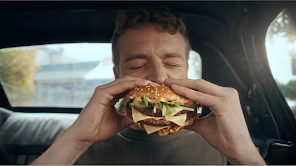
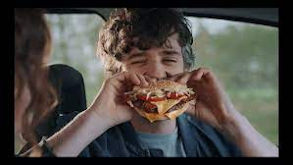
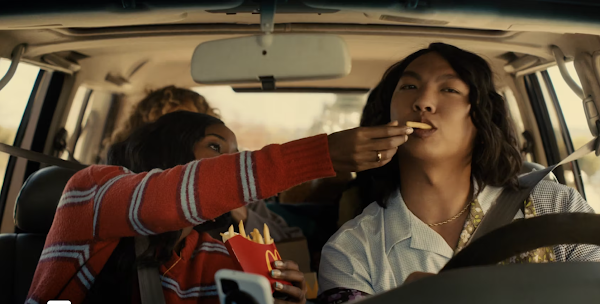
McDonald’s conducts large-scale advertising campaigns globally through television, radio, and online platforms (such as Google Ads and social media ads) to enhance brand awareness and attract customers. For instance, in 2018, McDonald’s launched the “Hands Full” campaign, investing heavily in TV and YouTube ads to promote its new ordering innovations, which extended beyond traditional counter service.
During the pandemic, to strengthen the emotional connection between online and offline experiences, McDonald’s launched the “Fan Truths” campaign. This series featured real stories and experiences from customers at McDonald’s, broadcasted through TV ads and social media platforms. The campaign aimed to walk alongside customers during challenging times, reinforcing emotional bonds.
Beyond advertising, McDonald’s is committed to deep collaborations with media from diverse cultural backgrounds, covering various global cultural groups. For example, McDonald’s has increased its advertising spend with Black, Latinx, AAPI, women, and LGBTQ-owned media companies.
One notable example is the “House of Pride” event, in collaboration with the LGBTQ television network Revry. This event celebrated LGBTQ culture with celebrity appearances, musical performances, dance tutorials, and more. It was broadcasted on Revry and widely promoted on social media.
Earned Media
McDonald’s in Hong Kong and China have effectively utlised earned media to gain public attention by influencers collaboration, strategic partnerships and community engagement.
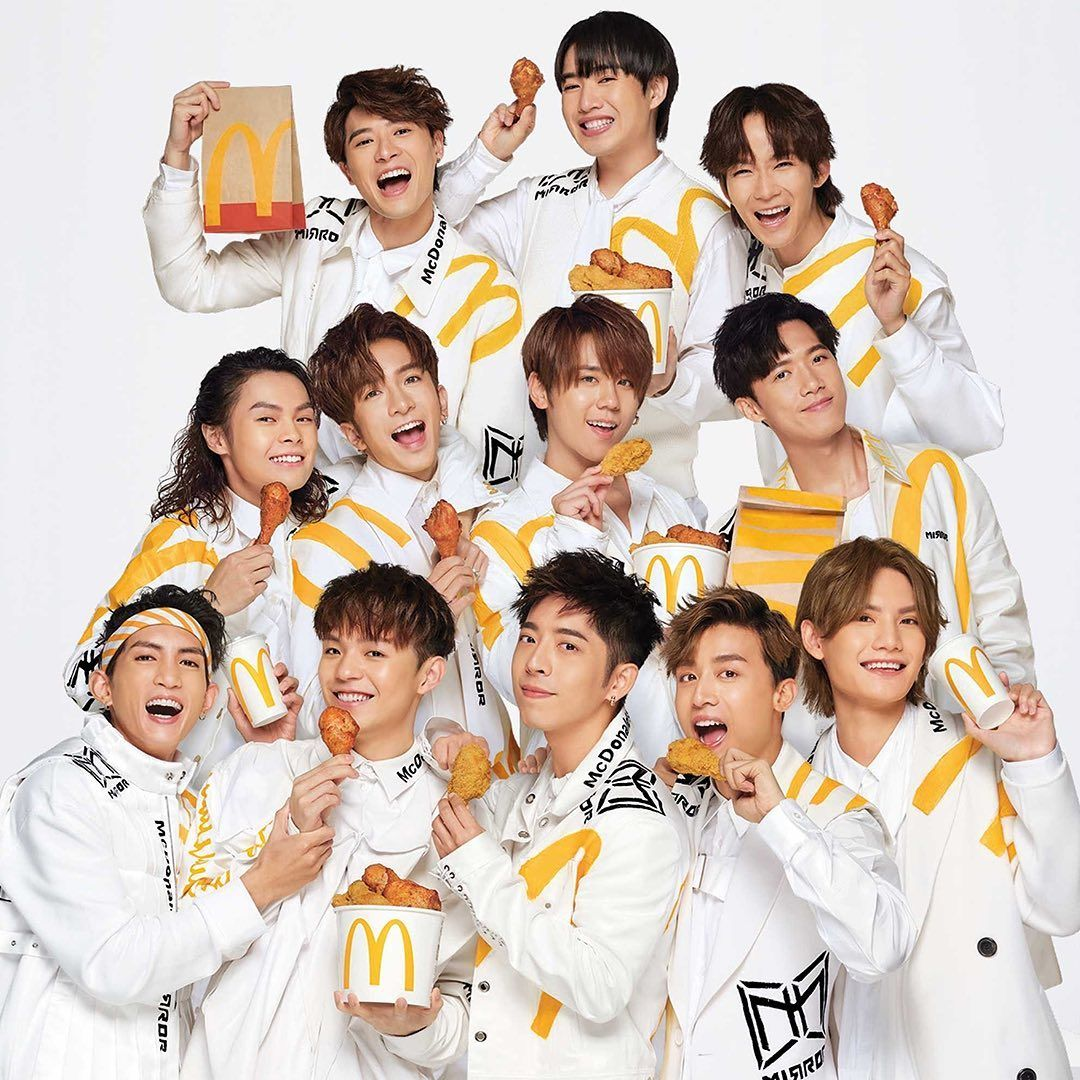
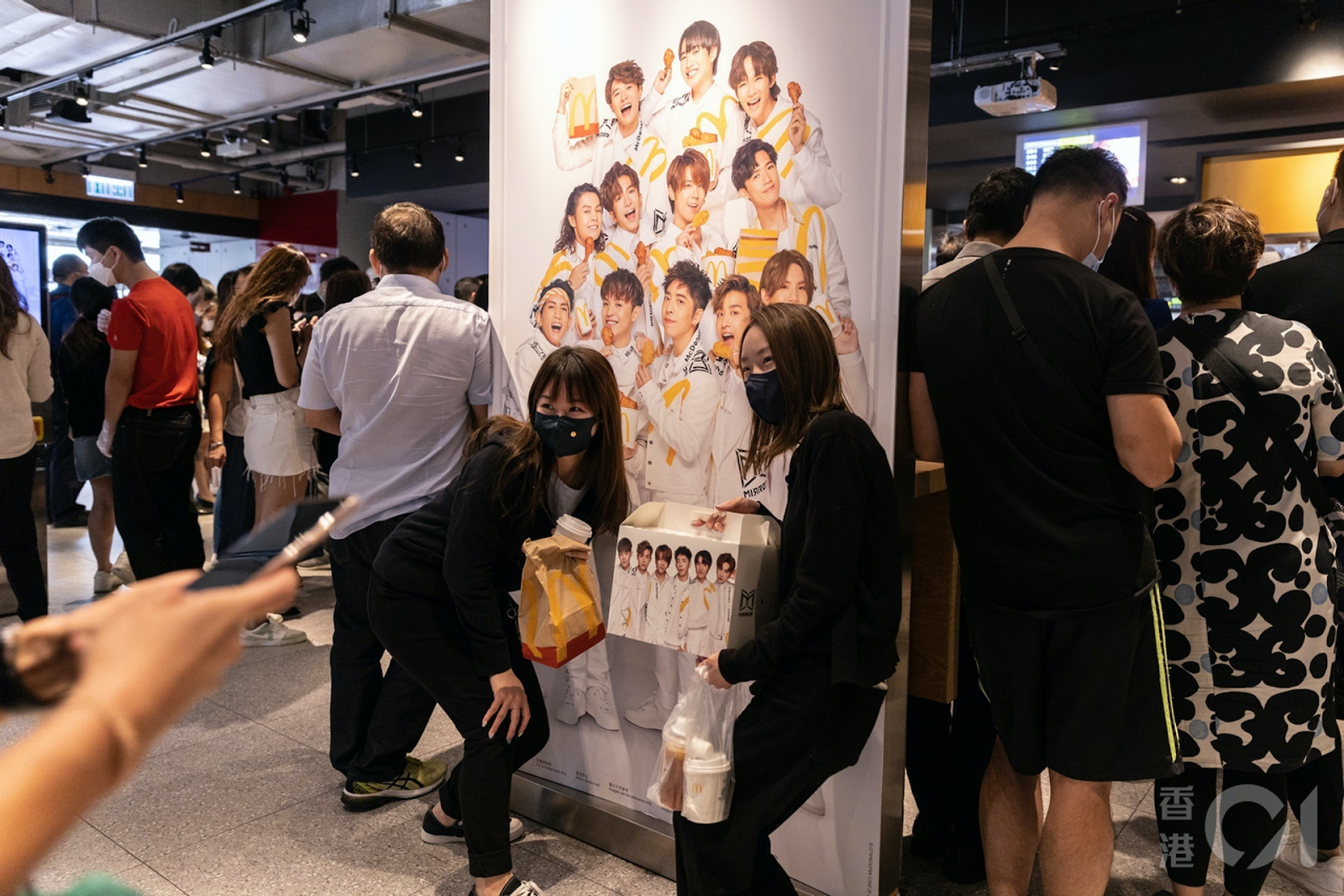
For instance, McDonald’s often collaborates with idols, local influencers and food bloggers. In 2021, McDonlad’s Hong Kong collaborated with the local male group “Mirror” to promote their new product “Garlic herb Crispy Thigh”, while celebrating Mirror’s Three Years Anniversary. Limited edition campaign was established by launching Mirror Meal and McDonald’s x Mirror Flashcards. According to Marketing Interactive, the Mcdonald’s x Mirror short promotion video had 1.5 million views after premiere and set off a wave of flashcard exchanges on social media platforms. McDonlad’s utlised the influence of “Fan Economy” and successfully gained back the lost younger audiences in Hong Kong after this campaign. McDonald’s also collaborated with local influencers by creating reels and food reviews of new products. These partnerships lend credibility to their new campaigns and the sharing of influencers can generate organic interest and discussions of the new products online.
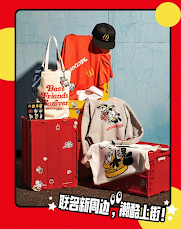
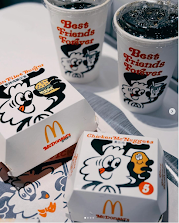
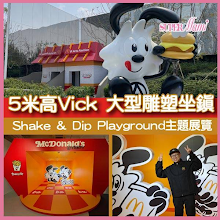
Moreover, McDonlad’s has strategic partnerships with artistes or brands to initiate cross industries collaboration. In 2023, Japanese streetwear designer VERDY’s expanded their social circle to McDonald’s China by dishing up a special menu “Shake & Dip” and created Collaborative merchandise. An offline event “McDonald’s x Verdy: Shake & Dip Playground Exhibition” took place at Hong Kong West Kowloon Cultural District to showcase a delightful fusion of culinary and cultural art.
McDonal’s has engaged in corporate social responsibility initiatives, such as establishing Ronald McDonald House Charity (RMHC) to build strong partnerships with Hong Kong Children’s Hospital and the local medical community. RMHC has extended supporting service and provided resources for families with illness children. This positions McDonald’s as a socially responsible brand and creates positive earned media that enhances the company’s reputation.
Shared Media
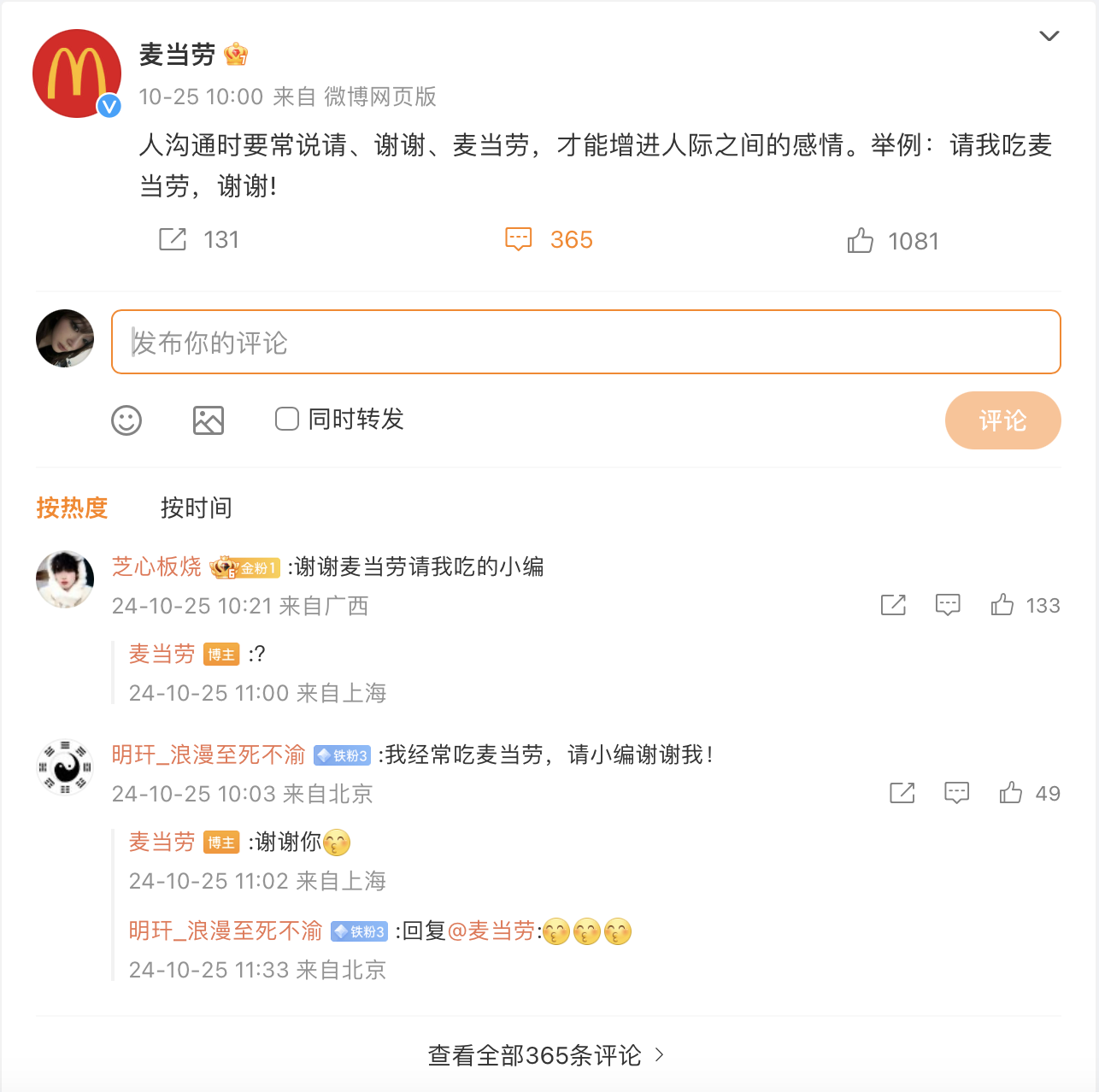
In terms of shared media, McDonald's promotes UGC generation mainly by launching campaigns and triggering discussions on social media. In mainland China, this is mainly focused on two social media software, RED and Weibo.
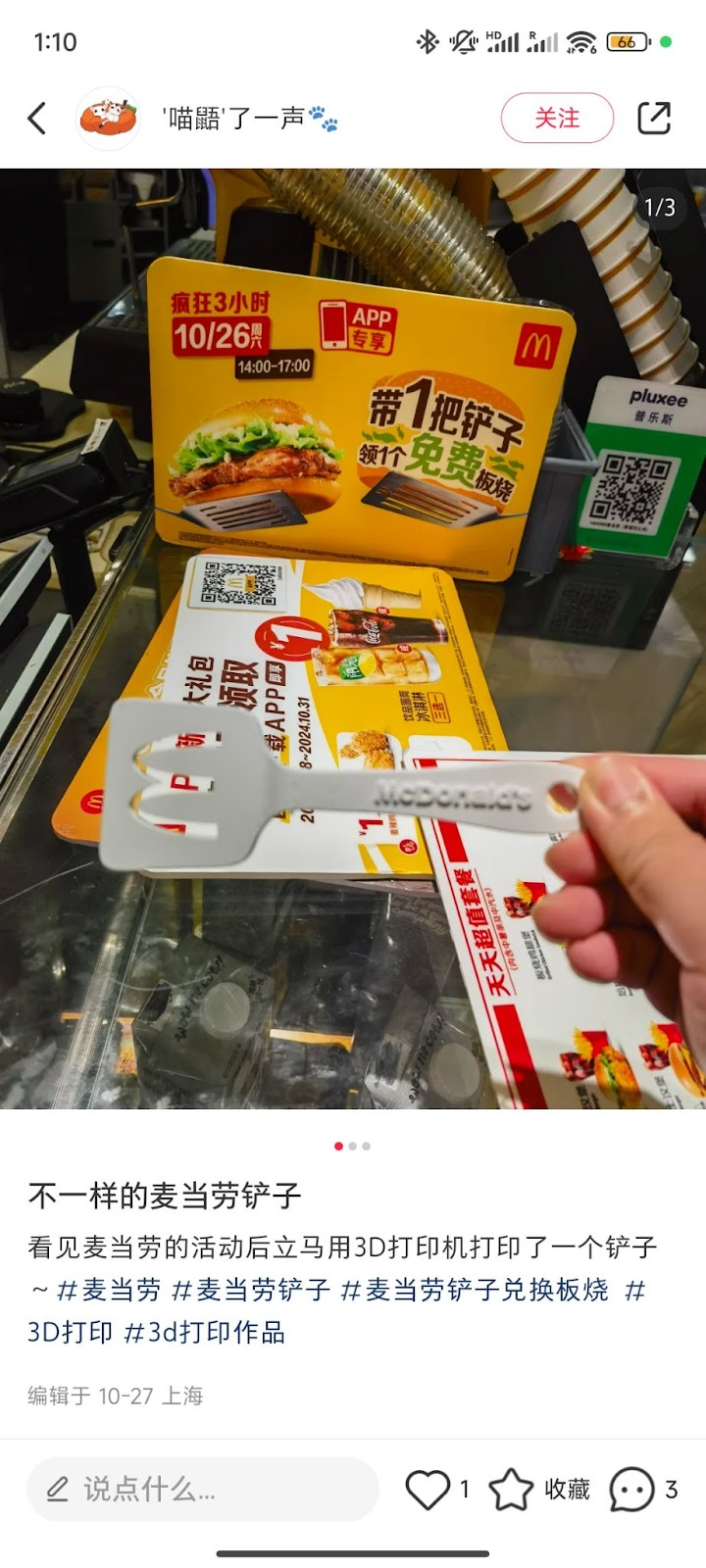
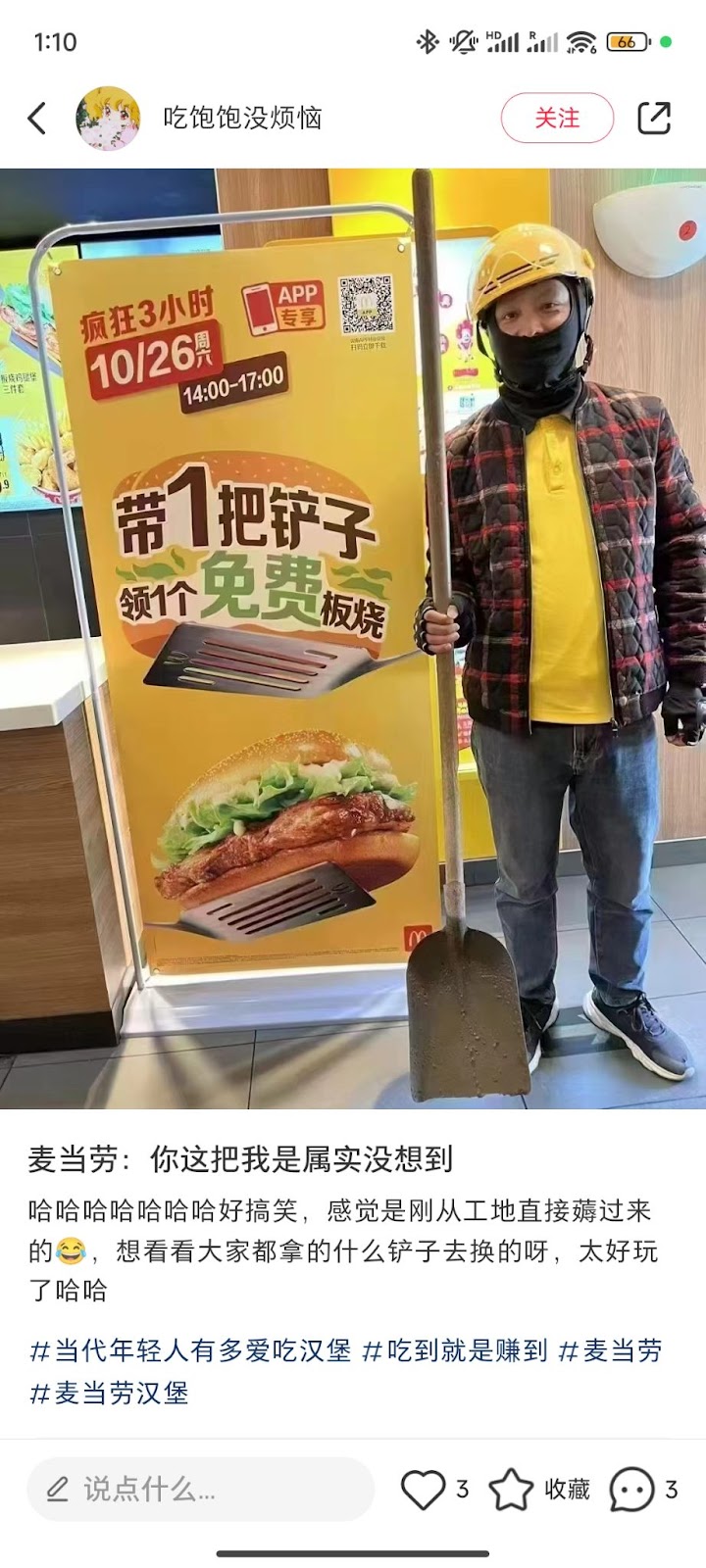
For example, on October 26th, McDonald's in mainland China launched a free burger campaign: just bring a lightweight, arbitrary form of “shovel” to the store and you can get a free burger. This greatly stimulated the creativity of netizens, many of whom brought paper or DIY spatulas and took photos of them to post on social media, generating a wider discussion and spreading the word about McDonald's.
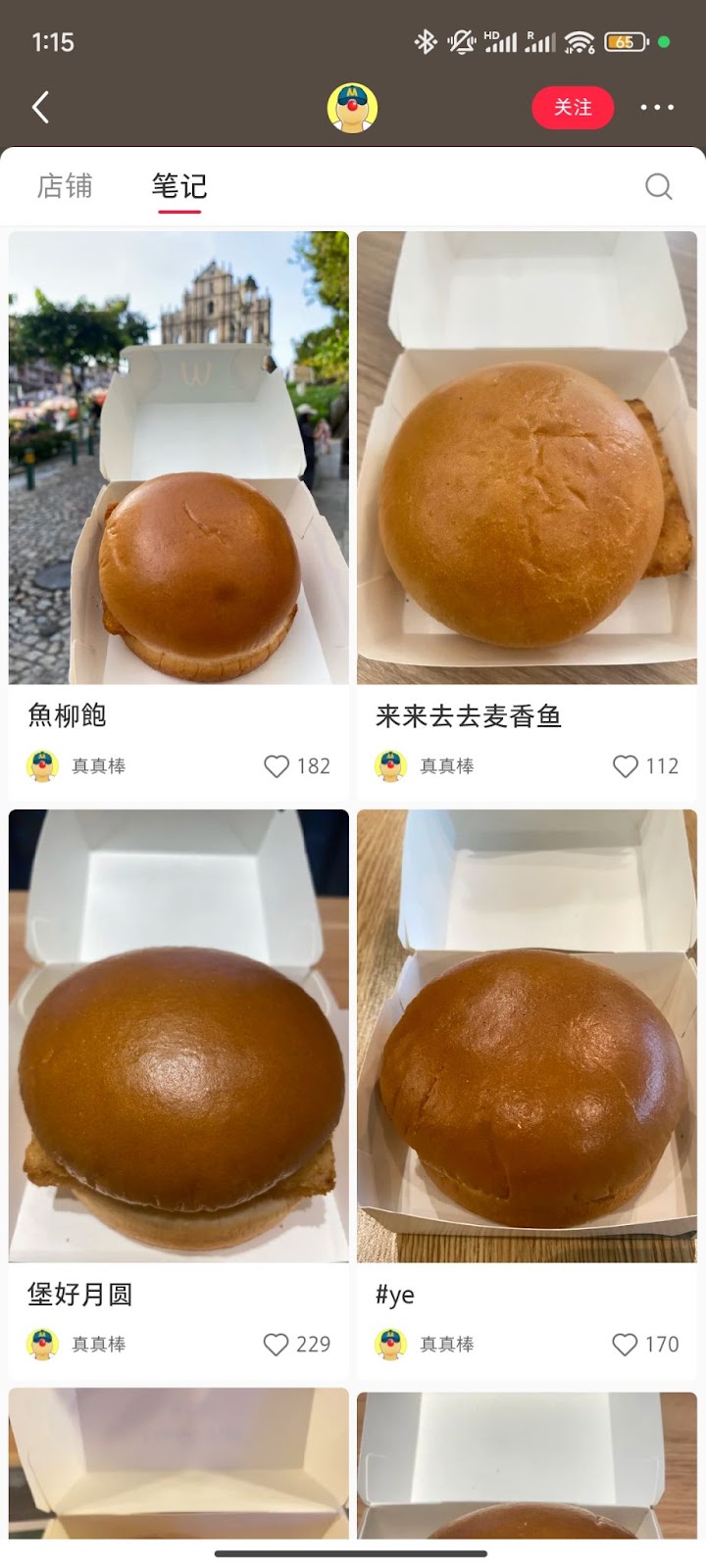
Beyond the officially guided social media discussions, there are also memes that are spontaneously generated and proliferated on social media due to the high visibility of the McDonald's brand itself. for example, a netizen who consistently ate McDonald's and photodocumented his burgers over about three years quickly became a legend in the online community.
Owned Media
McDonald's marketing strategy using owned media is multi-dimensional and innovative, covering physical assets, digital assets, and created assets.
Firstly, McDonald's eye-catching "M" logo packaging not only facilitates recognition but also serves as a form of social currency for the brand. The uniform decoration style in McDonald's stores is part of McDonald's brand building, enhancing the brand's recognizability.
McDonald's expands its brand influence by selling related merchandise, such as Happy Meal toys in collaboration with various IPs, like Minions and Doraemon. These not only attract children but also successfully arouse the collection desire of adult consumers, playing a promotional role.
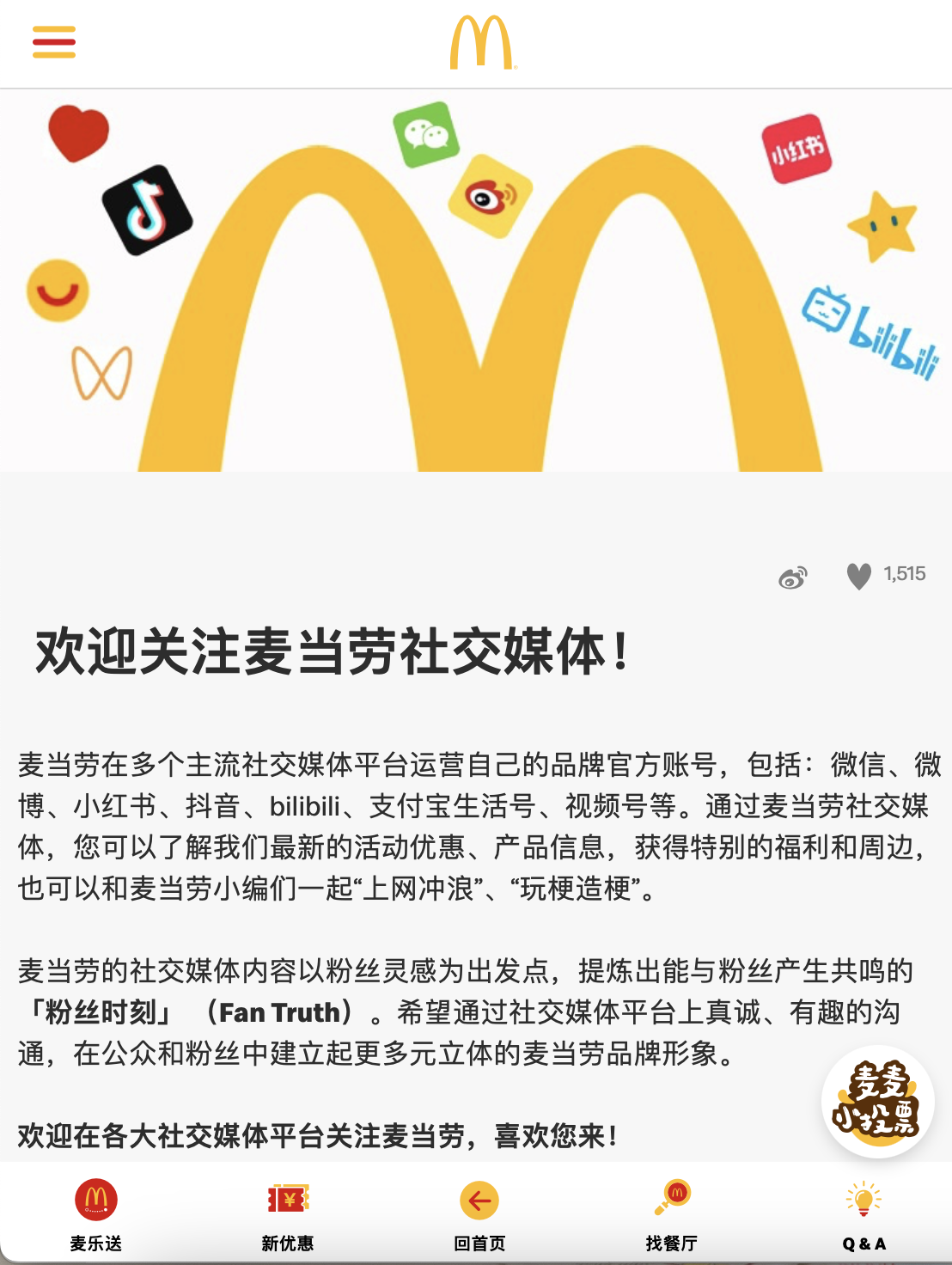
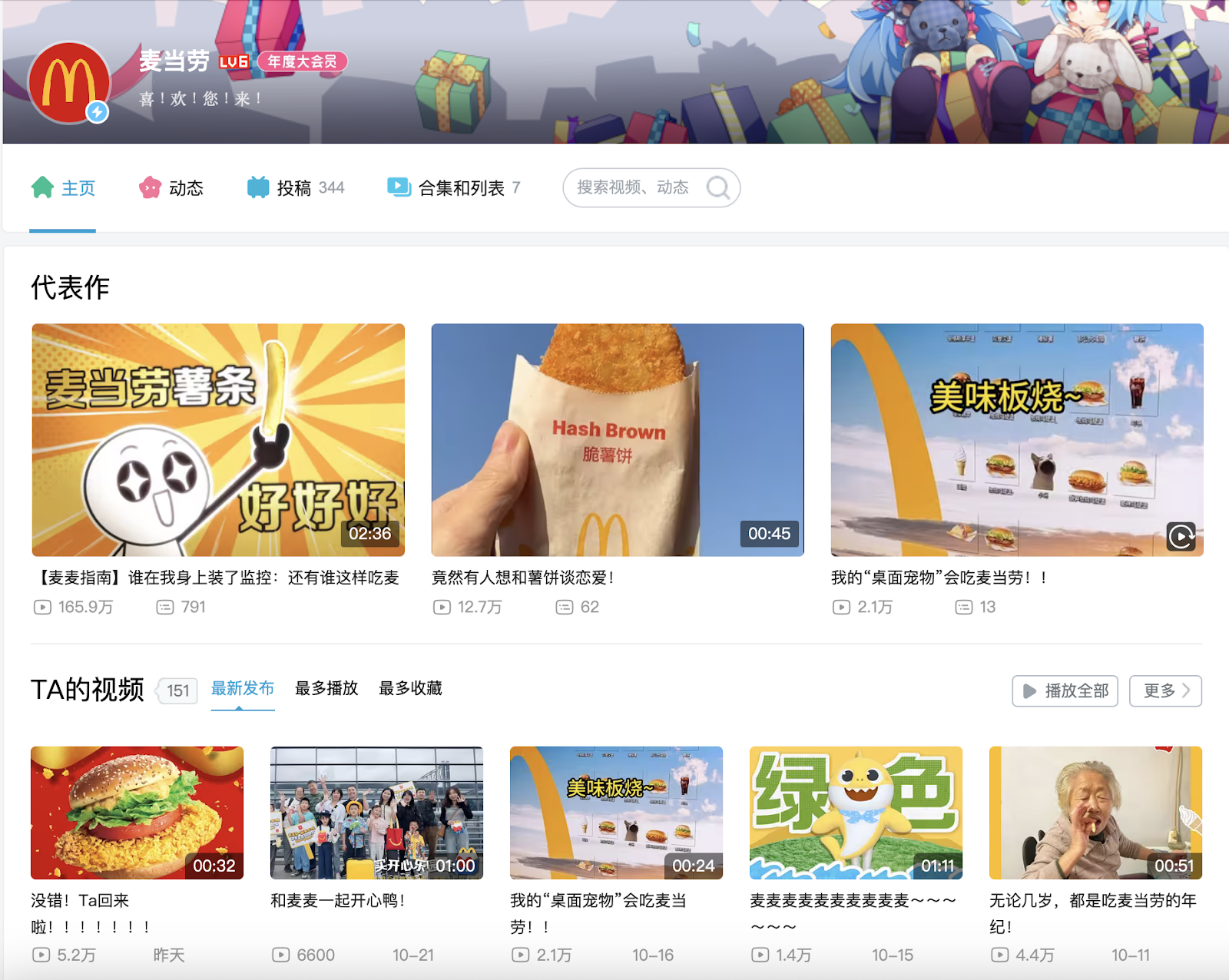
In terms of digital assets, McDonald's has its own official website and official Apps, and actively operates its brand's official accounts on multiple mainstream social media platforms, including WeChat, Weibo, Xiaohongshu, Douyin, Bilibili, etc., with different content strategies for different platforms. Through these platforms, McDonald's releases the latest promotional activities, product information, and interacts with fans. McDonald's social media strategy is "Fan Truth," an approach that interacts with fans on an equal footing around McDonald's products, experiences, and brand. For example, the popular "McDonald's Literature" in mainland China is a clever use of UGC production characteristics for promotion, which not only drives McDonald's social topics but also subtly associates product information.
In addition, McDonald's enhances its brand influence by sponsoring and creating various activities. For instance, officially announcing collaborations with NBA star Derrick Rose and cross-industry cooperation with brands like Xiaomi and Cross helps expand the brand's influence and appeal.