Tuesday, December 3, 2024

Short Essay 2_CHEN Chenyu (1155219816)

A Brief Analysis of the Current State, Challenges, and Impacts of Programmatic Advertising Technology on Advertising Agencies

Programmatic advertising, built on big data and supported by various programmatic technologies, facilitates automated insights into consumer needs in specific contexts, resulting in the generation of programmatic creativity. Programmatic buying further ensures that highly contextually relevant advertising content or services are delivered to consumers, aligning deeply with their personal habits, spatial environments, real-time behaviors, and social dynamics. This enhances the effectiveness of advertising in the mobile internet era.


1. Current State

The ecosystem of programmatic advertising in China is increasingly optimized, with a growing number of platforms and enterprises within the industry chain. Leading internet companies such as Alibaba, Tencent, and Baidu have established advertising exchanges and DSP companies, actively driving the development of programmatic advertising. For example, AdChina, a notable DSP company, significantly enhanced its programmatic trading capabilities after its acquisition by Alibaba, leveraging its own data resources and expertise alongside Alibaba’s extensive e-commerce data and technological advantages.


2. Challenges

(1) Data Silos

Access to big data is a critical factor influencing the development of the programmatic advertising industry. However, as large corporations and government organizations typically control such data, programmatic advertising companies face significant hurdles in obtaining these essential resources.

(2) Fraudulent Traffic

The effectiveness of programmatic advertising relies heavily on the authenticity of traffic. On one hand, websites often inflate traffic to maximize economic benefits, harming advertisers’ interests. On the other hand, for programmatic buying companies, traffic data is a core element of their competitive edge. Yet, fake traffic fails to deliver actual advertising results.

(3) Cross-Screen Identification

While cookies effectively track user behavior in traditional PC environments for precise ad targeting, the mobile internet era introduces complexity. Users frequently switch between PCs, mobile devices, TVs, and outdoor screens, making user profiling increasingly volatile and complicating cross-screen identification, which in turn affects ad precision.

(4) Brand Safety

Some advertisers overlook brand safety, leading to rapid depreciation of brand value or even legal challenges. For instance, during programmatic campaigns, brands such as Nissan, Nationwide Building Society, and Unilever’s Dove found their ads placed next to offensive content. This triggered lawsuits from civil organizations and led 15 brands to suspend their advertising.


3. Impacts on Advertising Agencies

(1) Challenges to Creative Workflows: From Perfection to Experimentation

In the digital era, advertisers must maintain round-the-clock, context-specific communication with individual consumers. This requires producing a vast array of content quickly and at scale. Programmatic creativity has emerged as a solution, enabling the generation of diverse and adaptable creative elements tailored for cross-screen dissemination. By adjusting creative components, agencies can efficiently produce varied formats while retaining consistent messaging. This shift has profoundly disrupted traditional content production models in advertising.

(2) Challenges to Pricing Models

Programmatic buying has transformed pricing from traditional, manual negotiations to real-time bidding (RTB) and non-RTB transactions, known as open market and private market trading, respectively. These methods significantly enhance efficiency compared to traditional media trading practices.

(3) Organizational and Structural Challenges

Media-buying agencies, in particular, experience significant disruptions due to the separation of creative and media functions. High communication costs between departments and external partners hinder efficiency. Merging creative and media-buying teams often necessitates adjustments in leadership structures and employee composition. For global advertising networks, such as the 4A agencies, structural adjustments must align with global strategies dictated by headquarters, adding complexity and resistance to transformation.

The rise of programmatic buying also influences workforce composition. As creative and media functions converge, advertisers demand deeper integration with client needs. Moreover, the increasing complexity of programmatic campaigns calls for more specialized talent in data analysis and technology, emphasizing the critical role of technical expertise in enhancing competitiveness.

(4) Higher Client Expectations for Integrated Outcomes

Advances in internet technology have increased the volume of data available for analysis and expanded measurable touchpoints. Clients now demand that agencies not only elevate brand image but also directly contribute to product sales. Under mounting competitive and revenue pressures, advertisers expect optimal utilization of advertising budgets.

(5) Cross-Industry Disruption

Advertising agencies face competition not only from within the industry but also from external service providers. With the growing importance of technology and data in marketing, tech giants like Adobe and Microsoft are entering the advertising space. Unlike traditional agencies, these companies boast advanced technologies, extensive data resources, and the ability to attract top advertising talent with high salaries. These advantages allow them to offer clients not just data support but also strategic advice and even end-to-end advertising content production.


Conclusion
The rise of programmatic advertising has significantly reshaped the advertising landscape. While it offers immense opportunities for efficiency and innovation, it also presents formidable challenges in data access, traffic authenticity, and organizational adaptation. Advertising agencies must evolve rapidly to remain competitive in this technology-driven environment.



Short Essay 1_CHEN Chenyu (1155219816)

Case Study: Brand Collaboration in Honor of Kings

Honor of Kings has emerged as a phenomenon in China’s mobile gaming scene in recent years. On October 26, 2024, its official Weibo account announced that over 100 million players logged in to celebrate the game’s ninth anniversary. This indicates that even in its ninth year, the game maintains a daily active user (DAU) count of hundreds of millions. According to AppMagic, in September 2024, Honor of Kings topped the revenue charts for iOS mobile games in China, generating $140 million in in-app purchases.

Today, cross-industry collaboration has become a standard in brand marketing. Many brands are actively exploring opportunities in this space, with popular esports gaming IPs boasting massive fan bases being among the most sought-after partners. Since 2017, Honor of Kings has established numerous collaborations with brands across various industries, such as L’Oréal, Erke, Joyoung, Nestlé, and Huawei. The game has also forged deeper partnerships with well-received cultural IPs, including the Journey to the West TV series, SNK, and the Dunhuang Academy to align with trends favoring personalization, high quality, and cultural depth.

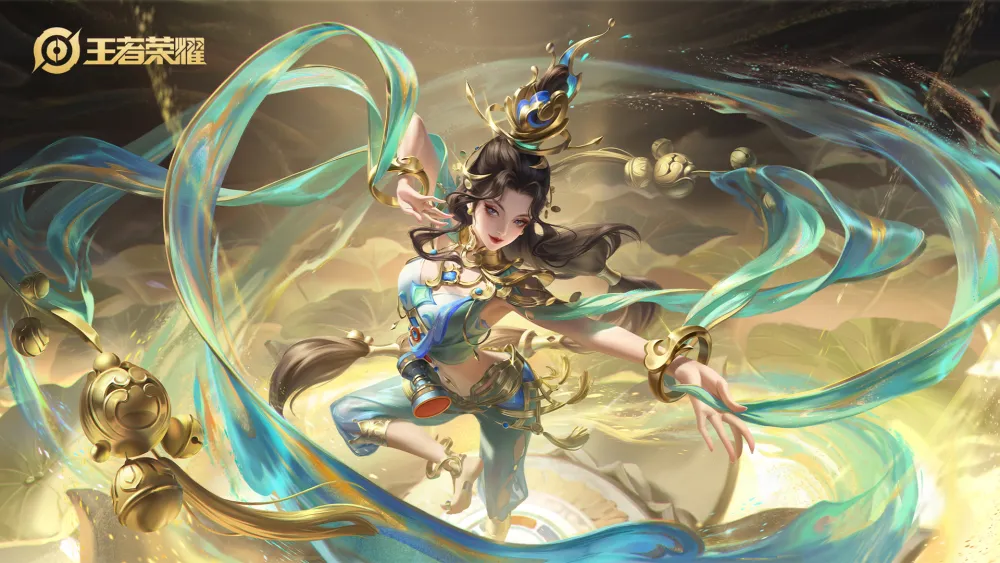
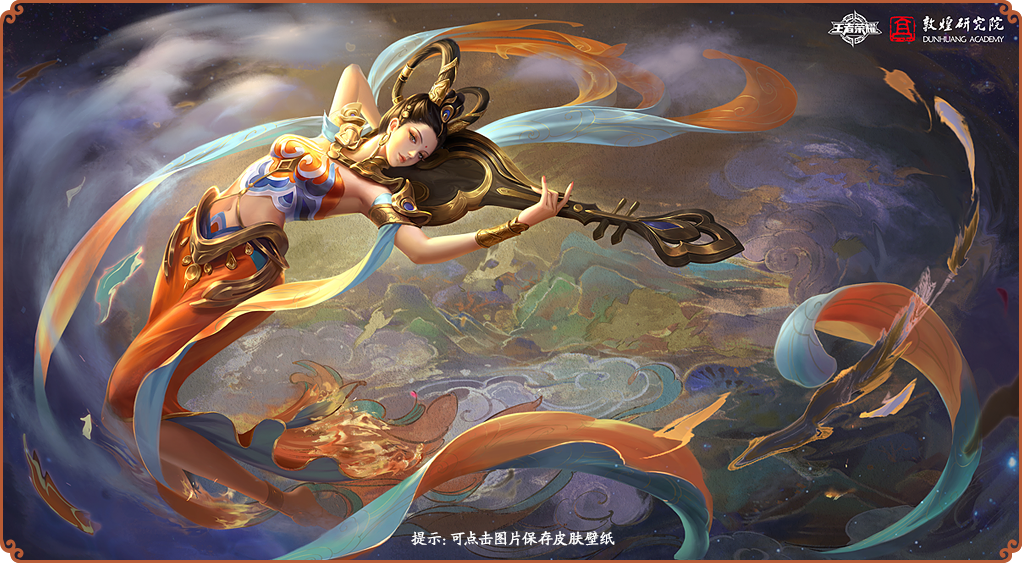
Honor of Kings has effectively leveraged different co-branding strategies, including ingredient branding, cooperative branding, and complementary branding, to build robust brand equity with its partners. One collaboration I personally admire is the partnership between Honor of Kings and the Dunhuang Academy, which resulted in the release of four uniquely designed skins.


Impact on Consumers

For consumers, the collaboration between the Honor of Kings and the Dunhuang Academy introduces young enthusiasts of traditional culture and museums to the richness of Dunhuang culture, ensuring its broader dissemination and better preservation. The game skins, resembling art pieces, draw inspiration from the Flying Apsaras murals, the "Nine-Colored Deer Jataka" in Mogao Cave 257, and the "Medicine Buddha Sutra Transformation" in Mogao Cave 220. They incorporate elements from ancient musical instruments, traditional paintings, and modern intangible cultural heritage. Amid the rise of Chinese cultural trends, Dunhuang culture, with its mystique and artistic richness, satisfies the public's growing appetite for Chinese heritage while addressing consumers' psychological needs to cultivate cultural sophistication.


Impact on Honor of Kings

For Honor of Kings, the collaboration seized the “Dunhuang fever” trend, significantly boosting its visibility, engagement, and virality. By integrating culture, the MOBA game’s contemporary gaming culture interacts with traditional Chinese aesthetics, resulting in a vibrant, new brand culture at the intersection of the two. Through this collaboration, Honor of Kings enriches its cultural depth, establishes a fresh cultural identity in players’ minds, and breaks free from its original brand boundaries, thereby advancing the Honor of Kings IP universe.


Impact on the Dunhuang Academy

For the Dunhuang Academy, collaborating with one of the most popular mobile games in China is equally impactful. Their partnership with Honor of Kings has steadily deepened, focusing on digital tourism and guiding the public along the Silk Road to give Dunhuang culture a fresh, modern identity. By utilizing video games as a platform, Dunhuang culture reaches a broader audience, further extending its cultural legacy.


My Views

I believe Honor of Kings achieves a synergistic marketing goal of "1+1 > 2" by collaborating with brands in distinct industries or with complementary brand values. While maintaining its original market base, it effectively integrates the audience bases of its partners, creating mutual benefits and resource-sharing opportunities for both brands.

Based on the Honor of Kings and Dunhuang Academy case, brands must evaluate several key factors when selecting appropriate collaboration partners:  

1. Alignment of Values and Positioning

The partner’s stance and values are critical to the success of the collaboration. Brands that align with current societal trends and enjoy policy support are more likely to ensure market acceptance. For instance, the collaboration between Honor of Kings and Dunhuang Academy resonated with the “cultural revival” trend, making the partnership highly relevant and appealing to the public.

2. Complementary Value Proposition

For brands with a significant market share, leveraging complementary strengths is essential in a partnership. For example, Honor of Kings introduced Dunhuang Academy to a broader audience of potential enthusiasts, while Dunhuang's rich artistic style added cultural heritage to the game. Brands should identify and address their weaker areas by prioritizing resource or audience group complementarities in their collaboration strategy.

3. Brand Image and Positioning

Collaboration partners must align with the brand’s image and positioning. Shared or similar brand philosophies enable quicker access to the partner’s audience, reducing the cost and difficulty of expanding market reach. This synergy also helps establish credibility and creates a seamless integration of brand identities.

4. Strategic Use of Promotional Content

The selection and design of promotional materials during the collaboration are crucial. It’s important to ensure a balanced representation of both brands while building distinct and shared brand equity. For instance, incorporating visual and thematic elements from both brands, like the integration of Dunhuang elements into Honor of Kings skins, highlights the partnership’s uniqueness while reinforcing the individual identities of each brand. 


Monday, December 2, 2024

Short Essay 2 :ALIMU(1155222170)- Maimen(麦门) Forever

Maimen(麦门) = McDonald's(麦当劳) + Golden Arches(金拱门,McDonald's localized name)

The term “Maimen” refers to the “sect” of people who like McDonald's. The term is modeled on the Jewish and Christian religious term “Amen”, which expresses the belief in the McDonald's brand. The term “Maimen” was created by the spontaneous interaction of McDonald's fans, where people became Maimen believers, shouted out Maimen declarations, and used “coded language” to communicate with employees in the form of Maimen passwords. (Actually received the influence of Crazy Thursday “疯狂星期四” as well)


Target Group:To target young consumers, especially Generation Z, who are highly sensitive to and engaged with online pop culture and terrain, and at the same time, to win back the lost users of Crazy 4.

Products:French Fries, Pork Tenderloin Egg Castle, French Fries, Burger & Fries Set

Peripheral: join hands with trendy brand clot to launch cool overalls online, launch Maimen walkie-talkie children's package of small toys, etc. to clothing, backpacks, hats, etc.

Marketing Tools

Communicate the core values: affordable, fast, humor, young

1. Music marketing (Maimen anthem):

  • In October 2022, “McDonald's Unlimited Goodness” sung by Eason Chan in 06 as a guest of the Soft and Hard Divine Combo concert became a hit again on b-station, and the Internet rebirth of the song fulfilled the basic conditions of viral spread in the Internet era.
  • ugc secondary creation: users of b station, Weibo, and Jieyin adapted the sacred song and produced UGC content, which pushed up the popularity of the sacred song “McDonald's Unlimited Goodness” and was called the “Maimen National Anthem” by netizens

2. Maimen concept established

December 2022, the official quick response, landing Maimen hot terrier for “official seal” “Maimen” began to appear in the official microblogging of McDonald's, officially “claimed” the title of Maimen, and in the follow-up and netizens to “Maimen” topic interaction, attracting a large number of “Maimen believers”. A large number of Maimen believers.

3. Maimen code words

On platforms such as the Little Red Book platform and takeout orders, and on the Maimen code word with McDonald's employees, i.e., on takeout orders, they indicate their identity as a Maimen believer and ask if they can get a few extra crisps to taste, and if they meet a kind McDonald's employee, they may really get extra fries. A number of people then followed suit and placed orders, following suit by posting content on the platform. This play is as much fun as opening a blind box.

4. Maimen Literature

  • Little Red Book, Weibo and other graphic-based content platforms, on the other hand, have become the focus of the dissemination of Maimen Literature position, the whole network to play terriers, Maimen Literature has become a hit workers go crazy special
  • Maimen Literature paragraph: If the pork tenderloin egg is the dazzling sun in the morning, the freshly baked hot french fries are the crutches that support the travelers on their long journey. May the wheat fries bless every child who is working outside, Maimen.

5. Fun video: In January 2023, the McDonald's b-site account released the “Maimen Guide” science video - https://b23.tv/5ees8MS

6. Emoji marketing: official Maimen emoji out in February 2023


7. Self-media matrix combination

  • microblog: McDonald's to establish “play terrier burst terrier old driver” image, with playful and humorous interactive dialogue to create a brand Maimen literature
  • WeChat public number: it is the generator of brand information delivery, and the fans' creativity is released in the form of a magazine similar to the brand's content.
  • Xiaohongshu: fits the attribute of graphic grass, creating a circle of friends for McDonald's editors to share.
  • B station: McDonald's official incarnation of the brand up master, released Maimen guide “McDonald's: Maimen what door? To carry out a serious popularization of science

Marketing Effectiveness

  • Social Media Interaction Data: According to the statistics, during the period of January-August 2023, the number of Maimen related works reached a staggering 48,000+, the total number of interactions reached 51,067,000, and the total number of likes also reached 36,741,000 times.


Short Essay 1 :ALIMU(1155222170)- Heytea and Fendi's co-branding

Heytea: a new Chinese tea drink brand, with a high-level brand image in ready-made tea drink stores: artisanal handmade, inspirational, Zen-like

Fendi: Italian luxury brand, insisting on handmade artisanal craftsmanship

Short Essay 2: Liu Xinyi

Reflection on "The Impact of Newly Emerging Media on Traditional Media Platforms in Taiwan: A Co-opetition Perspective"

Yu-Li Liu's "The Impact of Newly Emerging Media on Traditional Media Platforms in Taiwan: A Co-opetition Perspective" presented a very strong case study of a media market in transition. This resonated deeply with me not only due to the academic rigor invested in it but also its relevance to the global media landscape at large.

The immediate word that came to my mind was "co-opetition" simultaneous competition and cooperation by traditional and new media players. It is a dynamic. I have been able to observe in the media market at home, where established players battle the forces of disruption created by digital platforms while seeking partnerships and collaborations. In fact, concrete examples of the interaction between IPTV and OTT services with terrestrial and cable TV in the Taiwanese context provided a microcosm of this larger global trend.

The value chain analysis and diversified role of such players as content providers, network operators, and government regulators are presented in complicated relationships within Taiwan's media ecosystem. It went beyond competition identification to the different complex strategies being employed by the various players trying to negotiate shifting sands in this fast-evolving market. What interested me more was the nuance that relationships between companies are not static but fluid and dynamic, changing according to market changes and technological innovations.

One aspect that stood out was the discussion on the regulatory landscape. Government policies, particularly about must-carry rules and licensing, directly framed competitive dynamics. This has underlined the critical role that government regulation can play in framing media ecologies, a perspective often lost in market-driven analyses. The case of Taiwan serves to drive home a point: that media markets are not solely determined by technological changes or by market forces but in their essence by regulatory decisions. This is particularly relevant in my home country since regulation challenges are some of those issues that affect media development and competition.

While the paper was quite effective in dissembling the Taiwanese case, I still felt that an examination of the user experience could enrich such an analysis even more. The paper touched on issues of time and functional displacement but did not delve deeply enough into the nuances of how consumers actually engage with various platforms, their media consumption habits, or their motives for choosing one platform over another. A better understanding of consumer behavior would, in fact, strengthen arguments related to the long-term impact of these shifting media dynamics.

In Conclusion, Liu's study provides a timely and relevant analysis of the media landscape in Taiwan. Theorized with lucid empirical illustrations, the concept of co-opetition provides a strong framework for making sense of media market dynamics not only within Taiwan but also in other regions undergoing similar transformations. In particular, this deep analysis of the interplay of interactions between traditional and emerging media platforms, with consideration of the regulatory context, provides rich insights that are relevant to the interests of researchers, policymakers, and industry practitioners. Indeed, this work succeeds in bringing to the forefront a more layered understanding of the media ecosystem of the dynamic interrelationship between technology, regulation, market forces, and consumer behavior. This approach will render the study very useful in further research in the field of media studies, especially concerning the complexities of co-opetition in other media markets around the world.